
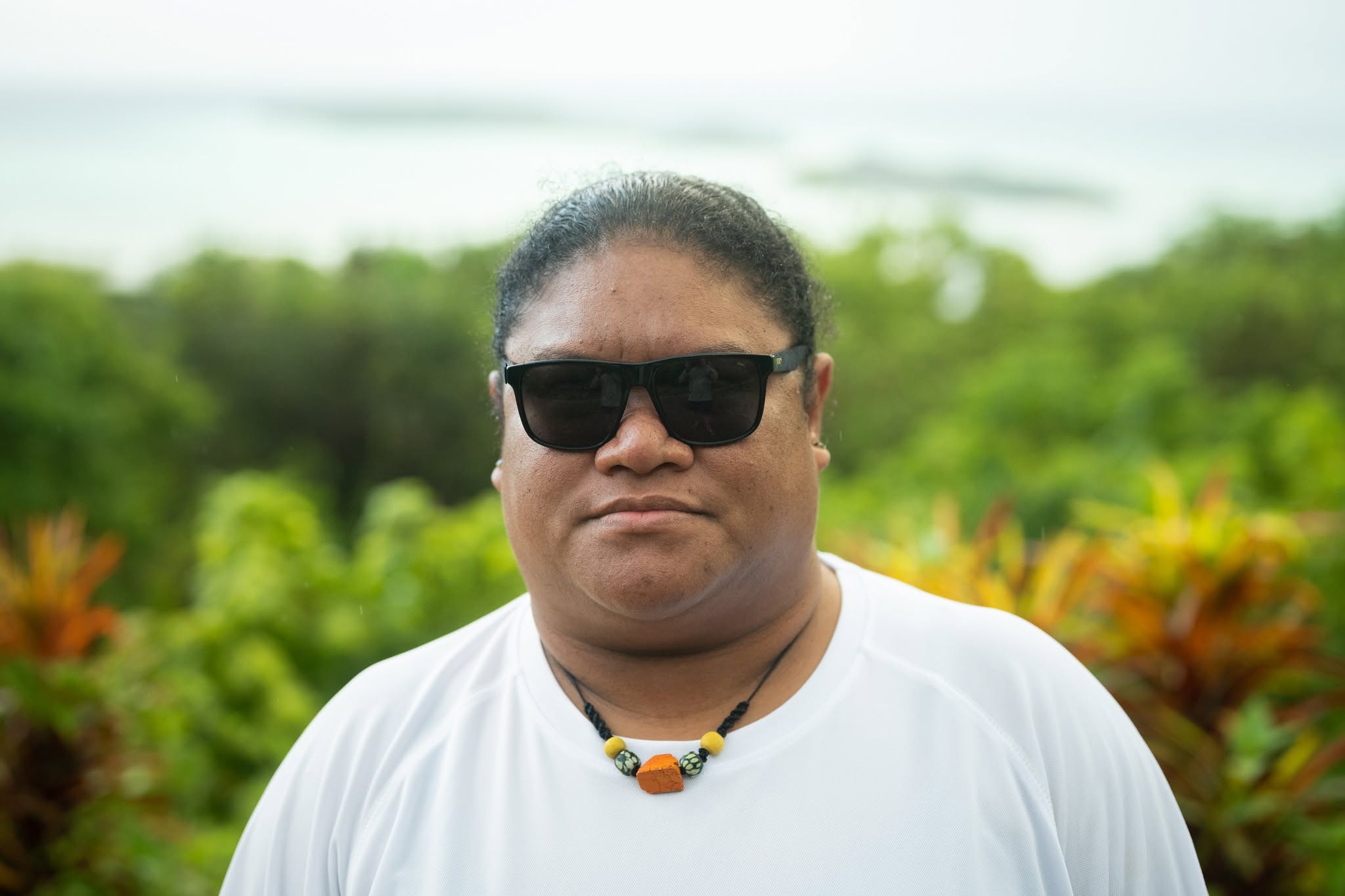
As Palau Country Director for OneReef WorldWide Stewardship, Kiblas is relatively new to the organization, but she brings with her years of experience working alongside communities to safeguard Palau’s cultural heritage. Before joining OneReef, she led Palau’s Bureau of Cultural and Historical Preservation, helping communities protect historic sites and preserve traditional knowledge for future generations.
“I wanted to come back to the environmental sector,” she explains. “Working in government meant there was a lot of paperwork and bureaucracy. What I really missed was being out in the field—working directly with communities, asking questions, listening and learning about what’s happening on the ground.”
That opportunity to reconnect with communities has been one of the most rewarding parts of her new role.
In just a few months with OneReef Micronesia, Kiblas has been working alongside communities restoring mangrove channels and learning about the many ways these ecosystems support island life.
“I love hearing the knowledge people have about mangroves,” she says. “How different species are used for building homes and meeting houses, their medicinal properties, and the many traditional uses that have been passed down through generations. That’s the kind of knowledge I really enjoy documenting and learning about.”
For Kiblas, protecting natural resources also means protecting the cultural knowledge connected to them.
One idea that has particularly inspires her is finding new ways to share traditional ecological knowledge with children.
“We often talk about engaging youth,” she says, “but I think we should also think about younger children. Research shows that the early years are when knowledge is most easily absorbed, so when we look at traditional ecological knowledge, can we then make resources for children? How do we make it more culturally contextualized?”
She sees this as an exciting opportunity to blend conservation, culture and education—helping ensure that future generations grow up with a strong connection to both their environment and their heritage.
Outside of work, many people know Kiblas for another passion—music. “I am a musician and I like to sing… I haven’t really tapped into my composition skills yet, but I’m getting there.” She would love the chance to collaborate with youth and kids through her music.
Conservation is about more than protecting ecosystems. It is about strengthening the relationships between people, culture and nature, and ensuring that traditional knowledge continues to inspire and guide the next generation of ocean stewards.